

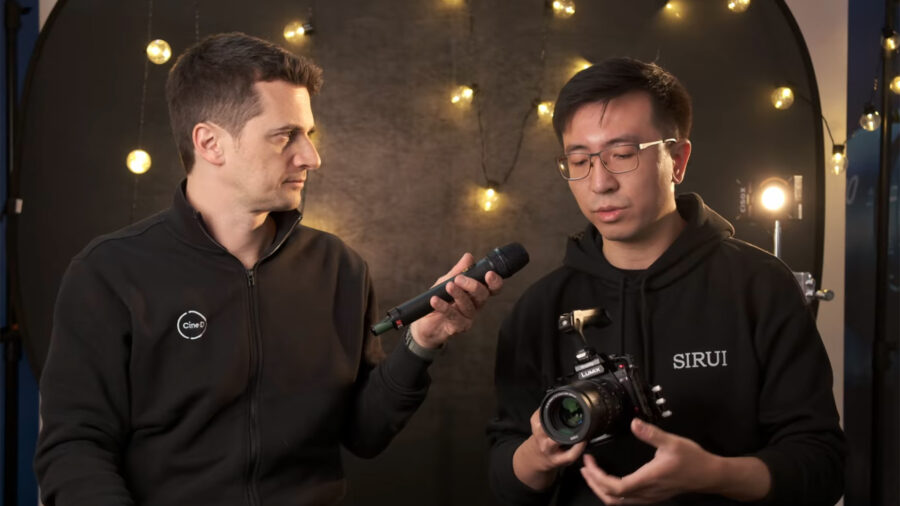
At BSC Expo 2026, SIRUI presented its Astra anamorphic series, a lineup of 1.33x squeeze autofocus lenses designed for full-frame mirrorless cameras. Currently available in 50mm, 75mm, and 100mm focal lengths, the lenses come in Sony E, Nikon Z, and L-mount options. We spoke with Yu Wu from the SIRUI team about where this new series fits within their broader anamorphic lineup.
We recently covered the SIRUI Astra Series announcement, the CineD and SIRUI livestream Q&A dedicated to the lineup, and a Focus Check podcast episode where we explored the series in more detail. At BSC in London, the discussion centered on positioning, optical character, and how the Astra series differs from SIRUI’s IronStar lineup.

Autofocus anamorphic for full-frame cameras
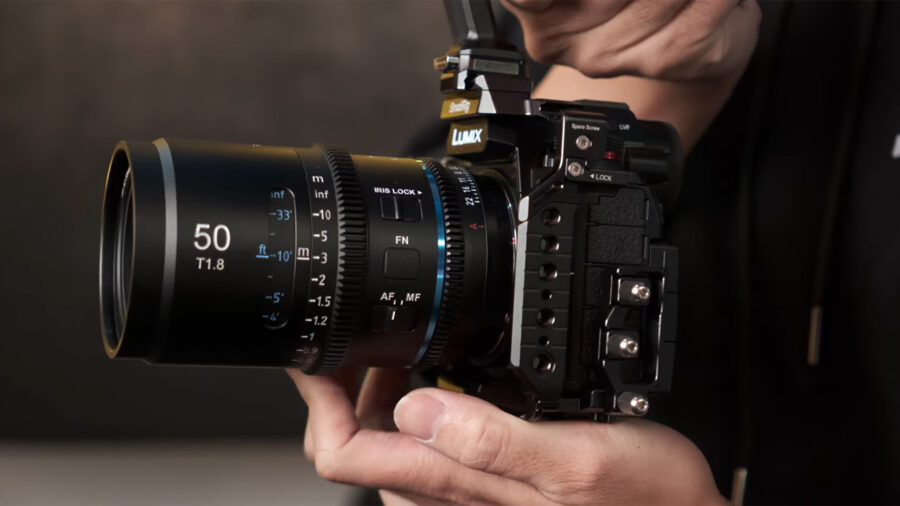
The Astra series is built around a 1.33x squeeze factor and is designed to cover full-frame sensors. According to Yu, this is the first autofocus anamorphic lineup developed specifically for full-frame cameras, designed to make anamorphic shooting more accessible to solo operators and hybrid shooters.
The 1.33x squeeze factor keeps things relatively straightforward. It works across a wide range of sensors and, in practice, delivers an aspect ratio of around 2.4:1 without having to overthink the calculations. That makes it easier for shooters who are curious about anamorphic but prefer to avoid the added complexity that comes with higher squeeze factors.
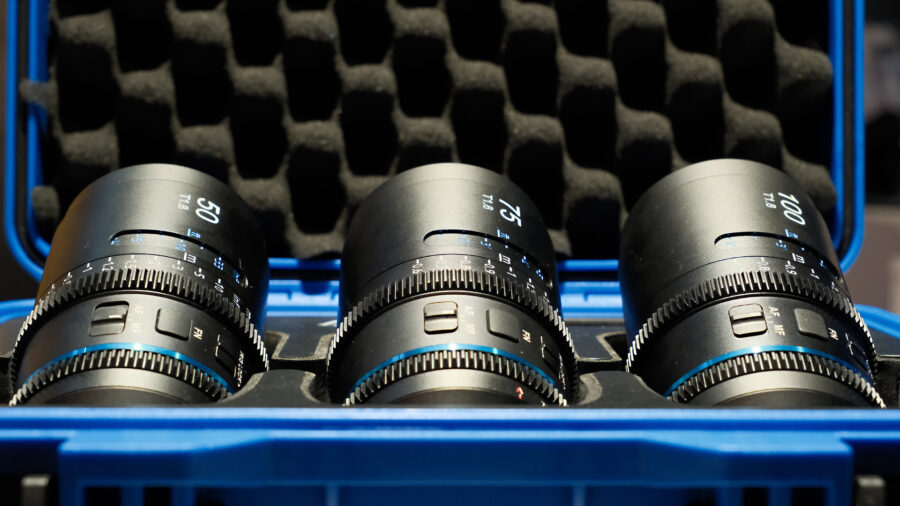
At launch, the series includes 50mm, 75mm, and 100mm focal lengths. The lenses are currently available in Sony E, Nikon Z, and L-mount versions, the latter following SIRUI’s entry into the L-Mount Alliance.
Optical character and distortion approach
With the Astra series, SIRUI deliberately chose to keep the optical character relatively clean. Flaring is present, and users can choose between neutral and blue flare versions, but it is not pushed aggressively. The idea was to create a lens that would work across a wider range of shooting scenarios rather than one defined by heavy stylistic traits.
In terms of distortion, the Astra lenses exhibit pincushion distortion rather than barrel distortion. The effect is noticeable but not exaggerated, reinforcing the series’ overall clean character.
Physical design and uniform build
All three focal lengths share the same physical design. The lenses maintain consistent dimensions, identical focus and aperture ring positions, and similar weight across the lineup, each weighing approximately 630g (1.4 lb).
Both the focus and aperture rings are geared for use with follow focus systems. At the same time, the compact size and uniform layout make switching between focal lengths straightforward, especially for solo operators working without a larger crew.
Positioning within SIRUI’s anamorphic lineup
During the conversation, Yu outlined how the Astra series sits alongside its existing IronStar 1.5x anamorphic lenses. While the IronStar lineup targets more traditional professional filmmaking environments, the Astra series is designed for solo operators and content creators who benefit from autofocus. The distinction is not only in the squeeze factor, 1.33x versus 1.5x, but also in the workflow. Astra favors lighter, more compact setups where autofocus can be practical.
Looking ahead, SIRUI indicated that future development will focus primarily on these two lines. Additional wider and longer focal lengths are expected to be added to the Astra series next year.
Price and availability
The SIRUI Astra lenses are available now in Sony E, Nikon Z, and L-mount versions. Each lens is priced at $849. A three-lens kit with 50mm, 75mm, and 100mm focal lengths is available for $2,549 and includes a dedicated case. For more information, please see the SIRUI website.
Does autofocus change how you would approach anamorphic shooting as a solo operator?
Would you choose a 1.33x squeeze factor for workflow simplicity, or do you prefer the stronger look of 1.5x or 2x lenses? Let us know in the comments below.


0 Comments